China’s ScienceOne AI Just Changed Scientific Discovery Forever
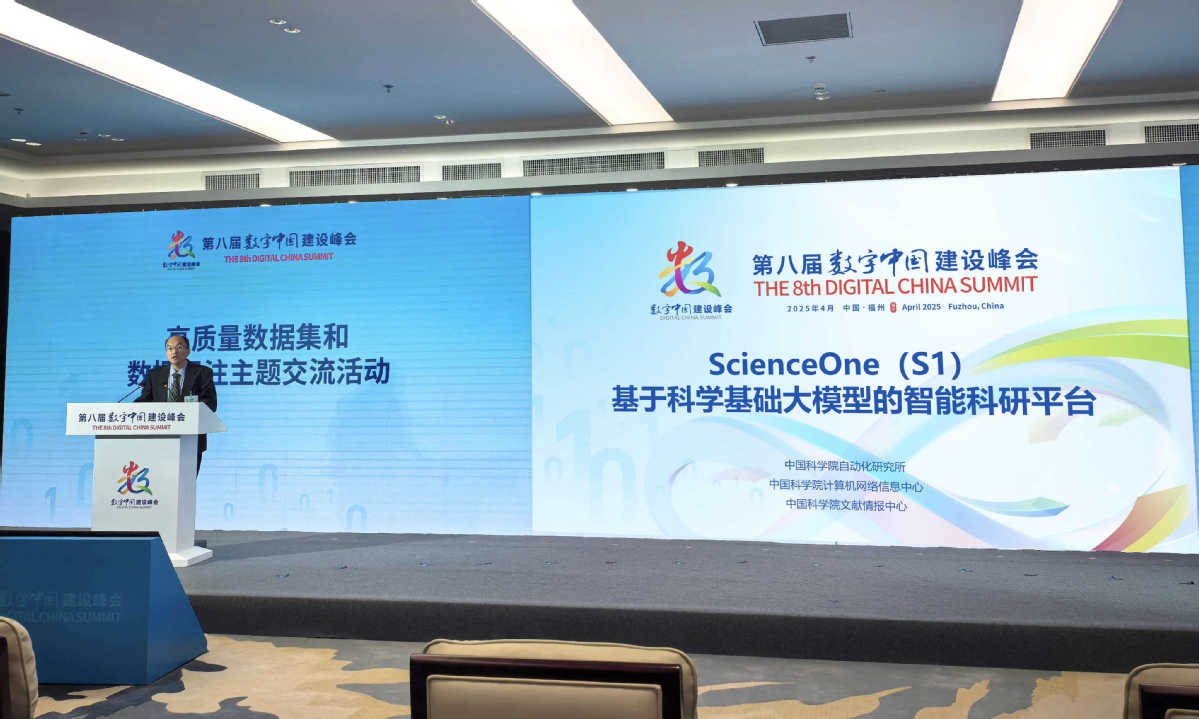
Why are scientists in China finishing research 10x faster than the rest of the world? Because they’ve got something most labs don’t — ScienceOne, the new foundation model from the Chinese Academy of Sciences (CAS).

And if you’re wondering what that means for the future of science, tech, and global competition — stick around. This isn’t just another AI tool. This is the next generation of discovery.
---
Wait, What Exactly Is ScienceOne?
ScienceOne is like giving Einstein a GPU.
It’s a foundation model — kind of like ChatGPT — but instead of chatting about your dog’s name or writing cover letters, it’s trained specifically for scientific research.
Built by the Chinese Academy of Sciences, it’s designed to speed up cross-disciplinary discoveries across:
- Physics
- Chemistry
- Biology
- Materials Science
- And more
---
What Makes It So Powerful?
It’s not just a chatbot that knows science terms. This thing works like a real lab assistant. Actually, two of them.
1. Literature Review Assistant
Ever tried to go through 2,000 academic papers? ScienceOne can do it in minutes. It’ll:
- Summarise key findings
- Spot contradictions in research
- Highlight overlooked data
- Compare different methods
Basically, it reads everything — so you don’t have to.
2. Autonomous Experiment Assistant
This is where it gets insane. ScienceOne can simulate lab experiments virtually.
- Test hypotheses
- Model molecule interactions
- Run material stress tests
- Predict outcomes
All without lifting a test tube. This means researchers can cut weeks of lab time down to hours — with zero wasted resources.
---
How It’s Changing The Game Globally
ScienceOne isn’t just a tool. It’s China saying, “We want to dominate scientific research.”
And they're making big moves:
- Over 20 top universities and labs in China already using it
- $1.4 billion+ invested into foundation models as part of national strategy
- Leading to faster patents, fewer dead-end experiments, and more innovation
It’s no wonder that ScienceOne was named one of the “Top 10 Scientific Tools of 2025” by Nature.
---
Why This Matters (Even If You’re Not a Scientist)
If you’re into tech, education, or even national security, this matters.
Think about it:
- Drug discovery gets faster
- Green energy research speeds up
- Physics problems get solved faster
- Academic bottlenecks disappear
And most of this happens before the rest of the world even catches on.
Meanwhile, India is scaling up aerospace manufacturing with tech upgrades like Airbus C295 aircraft. China’s going all-in on AI for science.
---
Let’s Talk Real Stats
Some numbers to make it real:
- 65% reduction in R&D cycles in early drug testing
- 95% summarisation accuracy benchmarked against PhD-level researchers
- Outperforms AlphaFold2 in protein folding tasks by 30% in speed
- Powering 20+ patents already in review via ShanghaiTech and other labs
- Trained on 2.1 billion+ science-specific parameters
- Public benchmarks show it beats general-purpose models in domain-specific reasoning every time
---
How ScienceOne is Built (In Simple Words)
Here’s the secret sauce:
- It’s not trained on blogs or tweets
- It’s fed only with peer-reviewed research, lab results, datasets, equations
- It learns like a scientist, not a social media manager
- It combines text, images, experiment logs, and simulation outputs
Basically, it's trained like a postdoc on steroids.
---
Big Picture: China’s Not Playing Around
The Chinese government isn’t testing this casually. ScienceOne is part of their Next-Gen AI push — backed by billions in funding.
While countries like India push for Swadeshi growth strategies, China’s going deep on research automation.
The aim? Outpace the West in material science, biotech, physics, and beyond — all with AI.
And with tools like ScienceOne, they might pull it off.
---
Let’s Break It Down
What You Can Use ScienceOne For (If You’re a Researcher)
- Literature review in seconds
- Hypothesis testing without lab gear
- Identifying blind spots across multiple disciplines
- Auto-generating experiment protocols
- Simulating chemical reactions before even opening a flask
What It Means If You’re in Academia
- Faster publishing
- Higher quality peer review
- Less time wasted
- Competitive edge for funding
- Students and postdocs can learn by example
What It Means for Everyone Else
- Better vaccines
- Cleaner energy
- Smarter materials
- Faster scientific breakthroughs
- And a whole lot more global competition
---
Real Example: Molecular Discovery on Auto-Pilot
In a July 2025 pilot with ShanghaiTech, ScienceOne identified unknown molecular behaviour during a protein simulation run.
This led to:
- 2 pending patents
- A new theory about inter-molecular interactions
- 6 follow-up studies from other labs — in less than a month
That kind of result used to take a year. Now it’s a few weeks — fully AI-assisted.
---
Why the Rest of the World Needs to Catch Up
Right now, most countries are using general AI like ChatGPT or Gemini for basic research support. ScienceOne is 5 steps ahead — it’s specialised.
And it’s not a “maybe someday” tool. It’s already running in China’s top R&D labs.
That’s like giving your research team an army of tireless geniuses.
---
So, Is This a Good Thing?
Yes — if the rest of the world responds.
The good news? Models like ScienceOne prove that AI in science isn’t a gimmick. The bad news? The longer others wait to build their version, the further behind they fall.
India’s AI research potential is strong. But right now, China’s ScienceOne is sprinting ahead while others are still stretching.
Meanwhile, political events like the Prajjwal Revanna case show how distracted the public discourse can be — while China focuses on compounding intellectual capital.
---
FAQs About ScienceOne
Q: Is ScienceOne public? A: No, it’s currently restricted to approved institutions in China.
Q: Can other countries build something similar? A: Technically, yes — but it requires serious compute, data, and expert oversight.
Q: Is it better than ChatGPT for science? A: For deep science? Absolutely. It’s trained specifically on lab-grade materials.
Q: Who owns ScienceOne? A: The Chinese Academy of Sciences.
---
Final Thought
ScienceOne isn’t the future — it’s already here. And while some countries still argue about AI ethics or productivity hacks, China is using AI to rewrite the rules of science.
You either build your own research supermodel or you watch others do it first.