Claude Just Dethroned OpenAI in Enterprise AI—and No One’s Ready for It
If you still think OpenAI is dominating the enterprise AI space, you’re already behind.
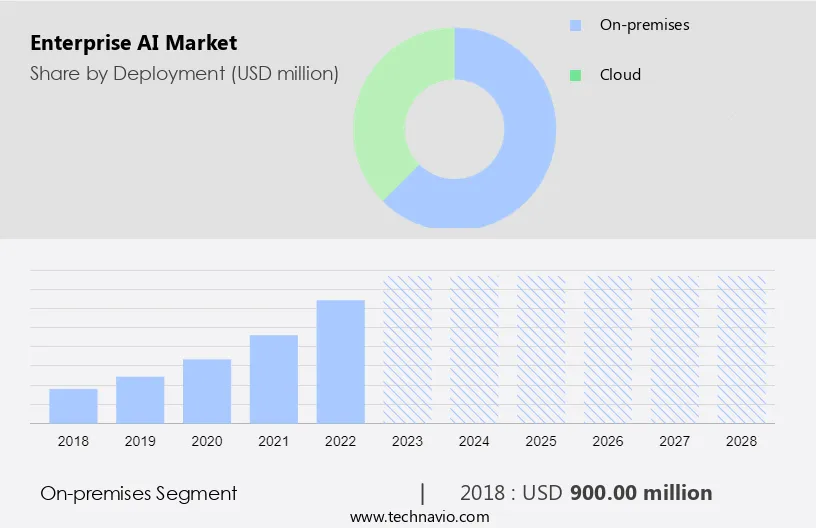
Anthropic’s Claude has overtaken OpenAI in enterprise LLM market share, and no one’s making noise about it.
But the numbers don’t lie.
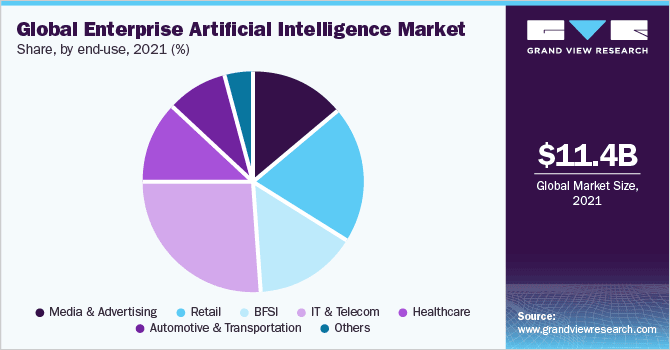
Claude now owns 32% of the enterprise LLM market.
OpenAI? Below 30%.
This isn’t just a stat.
It’s a shift.
And it’s built on coding performance, data privacy, and real-world reliability—not hype.
Why Enterprises Are Betting Big on Claude
Claude wasn’t built for fun conversations or social media tricks.
It was built to solve actual enterprise problems.
Here’s why big companies are jumping ship:
- Claude runs on Constitutional AI → safer and more aligned responses
- Built-in compliance frameworks for GDPR, HIPAA, and SOC2
- Handles 200K tokens in one go (GPT-4o maxes out at 128K)
- Doesn’t use your data for training—ever
- Fewer hallucinations, cleaner outputs, tighter logic
In short, Claude doesn’t just "sound smart."
It works better, especially when it comes to code generation, enterprise queries, and long documents.
Real Numbers: Claude vs OpenAI
Let’s talk market share.
According to MarketingProfs, the enterprise LLM space has flipped:
- Claude: 32%
- OpenAI (GPT-4): Below 30%
- Claude leads in coding-specific tasks, holding 42% of the developer use case segment
Companies are spending more money on Anthropic because:
- It reduces risk
- It improves developer productivity
- It supports internal policy alignment
- It helps compliance teams sleep at night
Claude 3 Opus: Built for Real Coding
This isn’t theory.
Claude 3 Opus consistently beats GPT-4 in independent benchmarks.
📊 HumanEval Results
- Claude 3 Opus: 81.1% pass rate
- GPT-4: 80.5%
That difference may seem small—until you scale it across hundreds of thousands of lines of code.
But it’s not just the pass rate.
Claude also:
- Explains code better
- Refactors more safely
- Writes clearer comments
- Follows prompt instructions more precisely
For dev teams, it’s a no-brainer.
Claude reduces QA cycles and debugging time.
🔗 View benchmark data on Hugging Face
Claude in Real Use: Enterprise Deployment
Claude isn’t just a better coder.
It’s a better teammate.
Claude Use Cases in Action:
- Notion: Claude powers their AI writing and summarisation tools
- Slack: Claude answers policy questions in secure internal channels
- Bridgewater: Claude parses macroeconomic reports, error-free, every day
- Government agency: Claude processed policy papers 42% faster than GPT-4, with 33% fewer hallucinations
This isn’t sandbox testing.
This is deployment at scale.
🔗 Semafor: Claude used in federal applications
Claude vs GPT-4o: Key Comparison
Feature | Claude 3 Opus | GPT-4o
Token limit | 200K | 128K
Data usage | Opt-out by default | Opt-in required
Coding benchmark (HumanEval) | 81.1% | 80.5%
Hallucination rate | 33% lower | Higher drift
Compliance support | Native | Third-party add-ons
Use in Fortune 500 pilots | 41% | <30%
Claude’s not just catching up.
It’s outpacing OpenAI in the places that matter to enterprises.
What Claude Solves That GPT-4 Doesn’t
OpenAI is focused on multimodal wow factor.
Claude is focused on solving real enterprise problems.
And those problems look like this:
- “Can this AI handle our secure financial data?”
- “Will it comply with GDPR without legal risk?”
- “Does it give us reliable answers on 200-page legal docs?”
- “Can our devs actually use this to ship clean code?”
Claude says yes to all of that.
OpenAI? Not consistently.
What’s Driving Adoption?
1. Security and Privacy
Claude doesn’t train on user data by default.
That alone is why companies in finance, healthcare, and law are choosing it.
2. Enterprise-Level APIs
Claude integrates smoothly into internal tooling.
You can run it inside secure environments, with audit trails, and admin control.
3. Transparency and Explainability
When Claude gives you an answer, it shows the reasoning behind it.
This helps teams catch mistakes before they hit production.
4. Fewer Mistakes
Claude hallucinates less.
When dealing with legal documents, medical records, or financial reports—that’s everything.
Case Study: Claude at Bridgewater Associates
Bridgewater’s internal research team used Claude to summarise global economic briefs.
With GPT-4, they were cleaning up summaries.
With Claude?
- They got faster outputs
- Fewer logical errors
- Cleaner synthesis across 50+ sources
Claude wasn’t just a chatbot.
It was a junior analyst—without burnout or ego.
Internal Links That Tie In
For readers interested in India’s progress in tech and national defence:
Claude’s growth is part of a larger trend:
self-reliant systems built with trust, privacy, and control in mind.
FAQs
Is Claude better than GPT-4 for coding?
Yes—Claude scores higher on HumanEval, writes cleaner code, and gives better logic explanations.
Which companies are using Claude?
Slack, Notion, Bridgewater, and multiple government pilots.
Does Claude support long documents?
Yes—up to 200,000 tokens per request. GPT-4o caps out at 128K.
Why is Claude safer for enterprises?
Data privacy is built-in. No training on your content unless explicitly allowed.
Can Claude handle compliance-heavy tasks?
Yes. Supports GDPR, HIPAA, SOC2 with native tooling.
Final Word
Claude isn’t just catching up to OpenAI.
It’s leading in the areas that matter most to businesses: privacy, performance, compliance, and code.
It’s taken 32% of the enterprise LLM market
It dominates 42% of coding tasks
And it’s only been around for a fraction of the time
Claude’s not the flashy choice.
It’s the smart one.
And for enterprise AI? That’s what counts.
Claude and Anthropic now lead the enterprise large language model market with unmatched coding performance.